
What Makes Music Psychedelic?
Repetition, Perception, and Form in the Music of Terry Riley

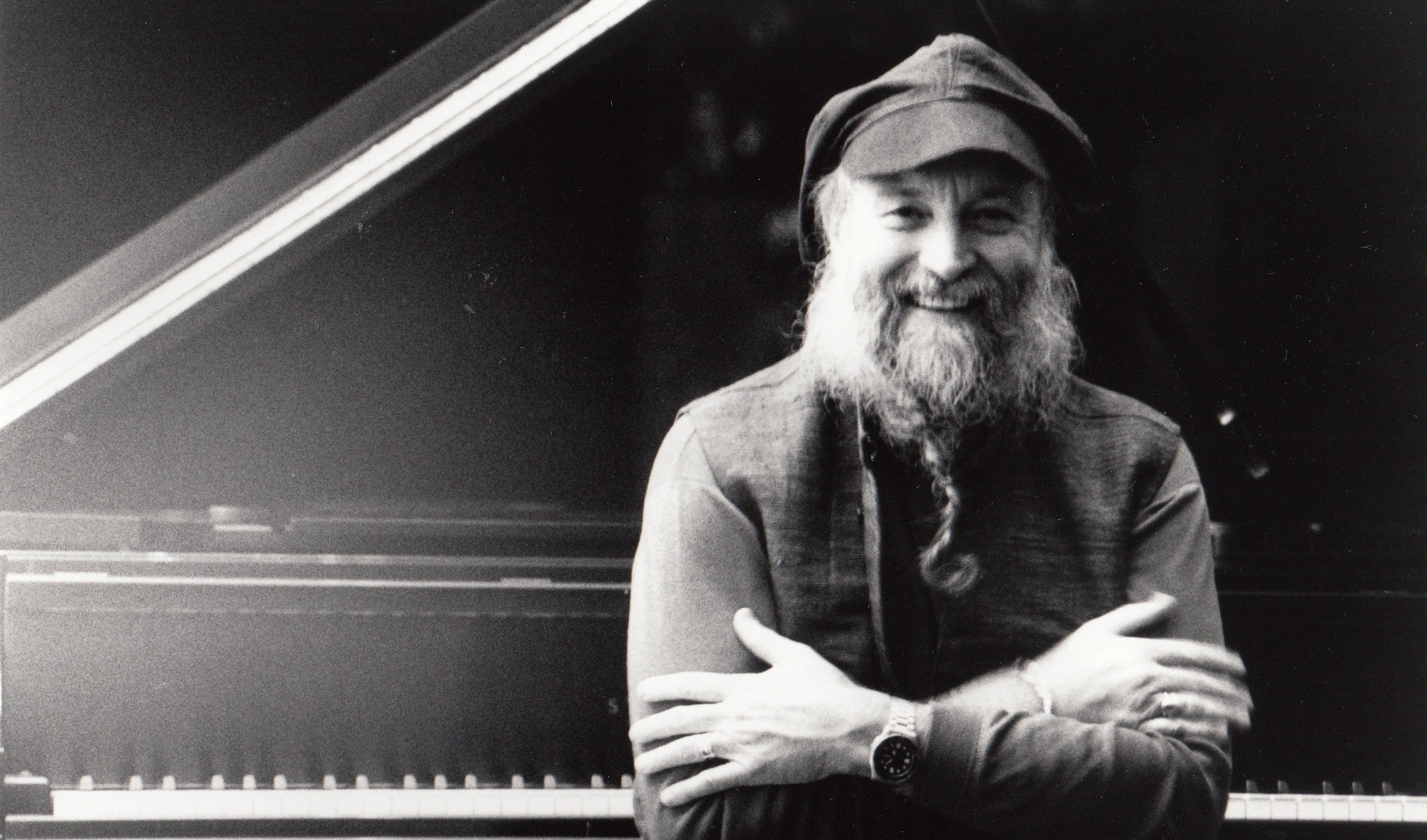
The impact of ‘classic psychedelics’ and their role in creating the counterculture of the 1960’s and early 1970’s is well documented, as is their wider impact on social relations, literature, art, and popular culture - most notably in music. Psychedelia has evolved into a heterogeneous genre of music that is either trapped in the amber of nostalgia or fragmented into a myriad of contemporary sub-genres from Psy-Trance to Chillwave. Avoiding the more obvious nomenclature this essay will analyse the question of ‘what makes music psychedelic?’ through the lens of minimalist composer Terry Riley.
Beginning with an expository analysis of the experimental tape-loop piece Mescaline Mix, then turning to the hypnotic and now-ubiquitous breakthrough work, In C, and concluding with the influential, genre-transgressing album A Rainbow in Curved Air. This study explores how psychedelics directly shaped the structure of Riley’s compositions and contends, that which makes music psychedelic is not simply the representation of an aesthetic, but an underlying structure that generates the experiential effect.
Riley studied piano and composition at San Francisco State College and later at University of California, Berkeley between 1960-61 where his tuition focused on Western classical and modernist composition including European avant-garde techniques. However, it was meeting fellow student and future collaborator La Monte Young, that influenced Riley’s future direction, including experiencing peyote together for the first time. ‘When I took peyote’, Riley relates, ‘then I really saw the sacredness of music’.1
Taking a conceptual approach to composition, Riley and his contemporaries such as Pauline Oliveros and Steve Reich, “in various ways used drone and automated repetition to make music out of extremely prolonged, minimal units of sound. The technologized techniques of durational extension in this “hypnotic” school of composition promoted awareness of sound’s vibrational presence within the body and afforded listeners psychoacoustic and sensory exploration.2 Indeed, equivalence can be found in ethnomusicologist Alain Danielou’s review of La Monte Young’s experiments with microtonal frequencies in a 1966 issue of Psychedelic Review which advances “that certain frequency ratios in music may produce “cosmic revelations” leading to “considerable effects on our psycho-physiological condition”.3
20th century composers such as Cage and Stockhausen inspired Riley to move away from standard instrumentation and adopt the recent technological advances in magnetic tape to loop, stretch and artificially manipulate pitch, tone and the audible perception of time. Indeed, it is the experimental, spacio-temporal approach to music composition that later became an intrinsic hallmark of psychedelic music - pieces that moved into the realms of non-teleological form, layering textures and using drone, repetition and gradual transformation. Riley’s new innovative form of composition found a home in an institution created by the artists themselves, through a “serendipitous meeting of like-minded individuals and cheap real estate”4 at the San Francisco Tape Music Center.
Throughout its fleeting five-year tenure, the San Francisco Tape Music Center became a nucleus of cross-fertilisation between the nascent counterculture and the West Coast avant-garde. Established in 1961 by composer, and then student of the San Francisco Conservatory of Music, Roman Sender “to provide a group of local composers with a studio and a venue for the presentation of their works, the Tape Music Center began at a time when composers increasingly recognised the enormous potential of electronic music”5. Sender and fellow student Pauline Oliveros curated ‘Sonics’, a series of concerts, the first of which debuted their electronic and tape-based compositions, and saw the first performance of Riley’s then clandestinely titled ‘M…mix’
Mescaline Mix
Mescaline Mix was originally created as background music to accompany ‘The Four-Legged Stool’ a dance performance by Ann Halprin. “Mescaline mix is a tape assemblage composed without sophisticated equipment. It was recorded in mono, sound on sound (a technique that accumulates distortion and background noise), the composer changing the tape speed manually to create special effects”6. It begins with the soft, white noise of tape hiss inherent in the medium. The slowed tape manipulation of ‘Laffing Sal’7 is the first recorded element we hear, this repeats on the loop, then other voices creep in, along with a low-end swell, then speeded up voices that sound like birds and cartoon-like sound effects with delayed, feedback. The loops repeats. Around 4 minutes in, we can detect the first discernibly musical sound of a simple blues piano motif, soon overtaken by whirling tape delay feedback. A fleeting dynamic shift appears when an abrupt dissonant, percussive crash at 5:05 interjects, though its origin is unrecognisable. The slowed laughter continues which, combined with other voices, feeding back on the tape loop now have an elephantine timbre. The melodic, improvised piano melody drifts in and out.
The accumulated, repeated tape delays resemble the wheezing, groaning “vworps”8 of the BBC Radiophonic Workshop Dr Who ‘Tardis’. At 10 minutes in, the density of the low-end timbre fills much of the auditory spectrum and sped up vocals appear adding birdcall like punctuation. 11:57 a whisper-to-scream acceleration of a firework appears and then, as the tape slows, mutates into a twittering bird call. Higher register piano notes now build and layer as tape loop feeds back into a crescendo with human voice, assumed to be the same sampled laughter or speech - then a distorted “hello” - as the undefinable crash from 5:05 returns. Electrical hum and the swell of tape hiss gradually saturate the sonic field as the repeated piano motif dissolves at 14:16, closing the work not with resolution but with diffusion. In doing so, Mescaline Mix stands as one of the earliest and most definitive attempts to translate the psychedelic experience into sound, establishing structural and aesthetic principles that Riley would expand and refine in the works that followed.
In C
Columbia records and their flagship classical imprint ‘Columbia Masterworks’, were quick to capitalise on the explosion of experimental composition with director John McClure being “struck by its resemblance to psychedelic rock and shocked to find rock artists and writers better informed on the topic than he”.9 As Riley’s work at this stage was virtually unknown outside of avant-garde circles, Columbia Masterworks hired experimental composer David Berman to produce a series of releases called ‘Music of Our Time’, of which Riley’s ‘In-C’ was marketed as “cutting-edge, psychedelic, and anti-establishmentarian sounds for young adult buyers”.10 The marketing verbosity continued with Columbia’s full-page ‘Music of Our Time’ advertising feature in Rolling Stone magazine calling Riley’s In-C, “The only legal trip you can take, a hypnotic sound experience”.11
Though clearly full of reductive marketing turgidity, as we have seen the concept of temporality in the music of Riley is innately linked to both the music and the psychedelic experience, and as Riley explains in the DRONE website interview from 2015 “LSD […] was a new way of hearing music, it opened up the time perspective of music so I didn’t hear it as being little events that had to end very quickly, I heard it as a big long trip that rides a big wave and ended much later, in a sense, the roots of In C”. Furthermore, “Riley himself confirmed the romantic Sixties mystique of In C by recounting how the piece just came to him on one day while he was tripping on acid (LSD). It took him only an hour to commit the fifty-three figures to paper”.12
Ego dissolution is one of the phenomena commonly experienced under the influence of classic psychedelics such as LSD resulting from “increased entropic brain activity and signaling complexity and diversity”13 and it is plausible to see a correlation between Riley’s use of psychedelics and the egalitarian nature of In C’s score. As Cecilia Jian-Xuan Sun states in Experiments in Musical Performance: Historiography, Politics, and the Post-Cagian Avant-Garde: “Every aspect of Riley’s work promises to enact an egalitarian model of music making that would seem to exemplify the spirit of the mythologized, all-embracing Sixties”. Not long after the release of the Columbia Masterworks LP, Janet Rotter attached the famous McLuhanite tag to Riley’s composition in proclaiming it “the global village’s first ritual symphonic piece”.14 Crucially, any number of people, playing on any combination of any instruments can play In C - the constraints of the instrument or the performer does not prevent participation in the performance, if a player is unable to execute a particular pattern, they simply skip it, pause, and re-enter with the next one.
The indeterminate, performer-controlled, nature of In C explains the volume of recorded and performed versions – there are at least 65 available from the online platform Bandcamp alone - not including the distinct ensemble performances, recordings and unique cross-genre reinterpretations; Africa Express, The Young Gods, Adrian Utley’s Guitar Orchestra, yet it is the 2001 recording by Acid Mothers Temple and the Vanishing Paraiso U.F.O. - a Japanese self-styled ‘soul collective’ led by Kawabata Makoto, that complete the metaphorical tape loop back to Riley’s psychotropic provenance. As the 2002 Pitchfork Album Review states, “There is something so right about the idea that a group of super-psychedelic rock freaks would take on a composition from the minimalist canon. Acid Mothers Temple is the perfect band for the job, enamoured as they are with the spirit of the 60s and the quest for the cosmic vibration”.15
A Rainbow in Curved Air
“Tape delay has a kind of psychological effect. It has this kind of mystical quality that echoes and things have for us. And I think […], a lot of us were drawn to that. We were looking at music and mysticism together” Terry Riley.16
The synergy of mysticism and psychedelia merged on Riley’s 1969 release for the Columbia masterworks series with Rolling Stone declaring the solipsistic affirmation that “you get to hear your own music while you listen to this”.17 Featuring two non-teleological, long form compositions, A Rainbow in Curved Air and Poppy Nogood and The Phantom Band, both of which use repetition and gradual transformation, with layered textures of soprano saxophone and organ fed through two reel-to-reel tape machines, used to create trance-like drones and repetitive cycles.
Experiencing this music as post-structural, minimalist composition, one becomes enveloped in a hypnotic soundscape, that Kramer coins “vertical time” - “a single present stretched out into an enormous duration, a potentially infinite “now” that nonetheless feels like an instant”18. Thus, time becomes arrested and aligned with the mystical experience correlated with psychedelic phenomenology.
Notably, Alan Watts cited time dilation as one of the definitive characteristics of psychedelics.19 “As with many phenomenological features, the experiences of time dilation and spatial alteration reach their apex in the ‘transcendence of time and space’ that is definitive of the mystical state”.20
Attainment of mystical experience was no doubt evident in Riley’s immersive live performances of A Rainbow in Curved Air and Poppy Nogood and The Phantom Band, as an air of ceremony proceeded over the ‘All Night Flight’ sessions in which performances ran through the night and were “more ambient and less formal than that of the standard classical music concert; audience members might lie down or sit on the floor and could come and go as they pleased”.21 Furthermore, audience participation was encouraged and contributed to the performance via an installation called the ‘The Time Lag Accumulator’ which “took the form of an ‘octagon with eight pairs of glass doors opening into chambers’, in which people could occupy the space and make utterances which would be relayed/delayed to the other chambers”.22 The participatory engagement of the audience exemplifies the distinctive influence of psychedelics on both the composer and broader culture, dissolving ego boundaries between artist and audience, while also reflecting Riley’s sustained interest in the psychical effects of music.
This essay has explored the question of what makes music psychedelic through analysis of the early development and key releases of the minimalist composer Terry Riley. “It is evident […] that Riley’s hallucinogenic experiences were […] crucial to both his spiritual and musical development” as the use of psychedelics “was intimately linked to Riley’s decision to explore a modal, rather than chromatic, music. ‘It wasn’t just tied up with getting high’, he recalls, ‘it was tied up with trying to find this deeply spiritual quality of music, which modal music had’”.23
It is therefore evident that, once removed from the cultural clichés of psychedelia (typically understood as ranging from 1966 to the early 1970’s), it is the use of psychedelics as a catalyst for cognitive change that influence the artistic output of a composer, which then implicitly imbues the music with psychedelic form. In the non-teleological instrumental compositions of Riley, psychedelia is exposed not only through drone and hypnotic repetition, but also long-form time dilation, immersion and perceptual saturation. On this basis, the question of what makes music psychedelic is not necessarily a representation of altered consciousness, but as a system that structurally produces it.
Potter, K. (2000). Four Musical Minimalists. Cambridge University Press
Strickland, E. (1993). Minimalism: Origins Bloomington: Indiana University Press
Szabo, V. (2023). Turn on, Tune In, Drift off, Ambient Music’s Psychedelic Past. Oxford University Press, New York
Bernstein, D. W. (Ed.). (2008). The San Francisco Tape Music Center – 1960’s counterculture and the avant-garde. University of California Press
Ibid.
Ibid.
Hicks, M. (2017). Mass Marketing the American Avant-Garde, 1967-1971. American Music 35(3), 283
Szabo, V. (2023). Turn on, Tune In, Drift off, Ambient Music’s Psychedelic Past. Oxford University Press, New York
Columbia Masterworks, Music of our time [Advertisement]. (1969). Rolling Stone, (27)
Sun, C. J.-X. (2004). Experiments in musical performance: Historiography, politics, and the post -Cagian avant -garde (Publication Number 3155029) [Ph.D., University of California, Los Angeles]. ProQuest Dissertations & Theses Global. United States -- California
Carhart-Harris, R. L., Leech, R., Hellyer, P. J., Shanahan, M., Feilding, A., Tagliazucchi, E., et al. . (2014). The entropic brain: A theory of conscious states informed by neuroimaging research with psychedelic drugs. Frontiers in Human Neuroscience, Article 20
Rotter, J. (1969). Review of Terry Riley’s In C. Glamour, (66)
Richardson, M. (2002). Acid Mothers Temple and the Vanishing Paraiso U.F.O. - In C Pitchfork Media. https://pitchfork.com/reviews/albums/21-in-c/
Szabo, V. (2023). Turn on, Tune In, Drift off, Ambient Music’s Psychedelic Past. Oxford University Press, New York
Columbia Masterworks, Music of our time [Advertisement]. (1969). Rolling Stone, (27)
Kramer, J. D. (1981). New Temporalities in Music. Critical Inquiry, 7(3), 539-556. https://doi.org/10.1086/448114
Watts, A. (1964). LSD, The Consciousness-Expanding Drug. G.P. Putnam’s Sons, New York. https://www.psychedelic-library.org/watts2.htm
Letheby, C. (2021). Philosophy of Psychedelics. Oxford University Press. https://doi.org/10.1093/med/9780198843122.001.0001
Mills, J. (2021). Musical Spaces: Place, Performance, and Power Jenny Stanford Publishing. https://doi.org/10.1201/9781003180418
Coe, R. T. (1970). The Magic Theater: Art Technology Spectacular. The Circle Press
Potter, K. (2000). Four Musical Minimalists. Cambridge University Press
 | A guest post by
|
I'm surprised you didn't also mention Persian Surgery Dervishes, one of Riley's improvisational pieces. Highly recommended "sacred" music.
Add the Grateful Dead whose longer tracks and extended improvisation were extremely psychedelic and could place you in terrifying catharsis or ecstasy...
Dark Star
The Other One
Playing In The Band and more.
Having seen them here in the UK every time they came, usually accompanied by LSD or mushrooms they stand alone in rock 'n roll as pyschedelic travellers.
We won't see their like again